
Sweating is part of sports, but unpleasant odors don't have to be. Still, many people know the problem: The performance shirt already smells after one workout, and even after washing, a musty odor remains in the fabric. We explain where the odor comes from, which material helps, and how you can manage sweat and odor when running, cycling, and doing triathlons.
Key takeaways
-
Welding barely has a smell.
The odor is caused by bacteria on the skin and clothing breaking down sweat.
-
Material makes the difference:
Merino wool is naturally odor-resistant, and functional fabrics with antibacterial treatments also help.
-
Wicking away moisture:
A base layer wicks sweat away from the skin and keeps it drier.
-
Act fast:
Don't leave sweaty clothes in your backpack; air them out or wash them immediately.
-
Wash correctly:
Low temperature, sports detergent, no fabric softener.
Why does sportswear smell like sweat?
Fresh sweat consists mainly of water and salts and is almost odorless. The typical odor only develops when bacteria on the skin and in clothing break down components of the sweat. The longer sweat remains in a warm, damp environment, the more bacteria multiply and the stronger the odor becomes.
Synthetic fibers such as polyester are ideal for sports because they quickly wick moisture away from the skin and dry rapidly. However, their surface can trap oil and sweat residues, in which bacteria settle. If these residues are not completely removed during washing, a persistent odor develops that returns even after washing.
Choosing the Right Material
Functional Fabrics
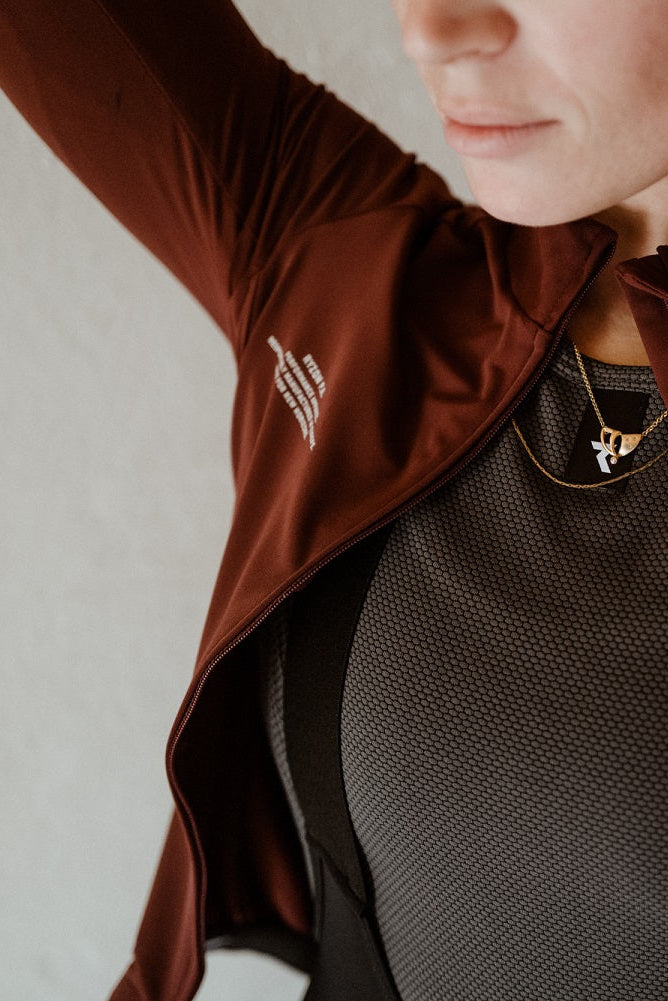
Modern functional fabrics quickly wick sweat away from the skin to the outside, where it can evaporate. This keeps the skin drier and provides less nourishment for bacteria. Many functional fabrics are also treated with antibacterial finishes. For example, the Signature Cycling Thermal Longsleeve Jersey has an antimicrobial treatment, and the Ritual Performance Baselayer is made of antibacterial, ultralight mesh.
Merino Wool
Merino wool is the classic choice against sweat odor. The fibers are naturally odor-resistant and regulate temperature, so you sweat less and feel comfortable even when damp. You can often wear merino clothing several times before it needs to be washed. Ideal for long rides, bikepacking, and multi-day trips where you cannot wash every day. At Ryzon, you can find merino in the Ritual Merino Performance Baselayer and the Trace Performance Merino Socks.
Avoid Cotton
Cotton absorbs sweat like a sponge, dries slowly, and stays wet against the skin. This not only promotes odor but also chafing and chilling. Therefore, cotton is not a good choice for sports.
How to reduce sweat and odor during exercise
What should I do if the clothes already smell?
If sportswear smells musty even after washing, residues have become trapped in the fibers. These tips will help:
Wash inside out: Sweat accumulates mainly on the inside. Washing inside out allows the detergent to come into direct contact with the affected areas.
Use a sports detergent: Special detergents for functional clothing remove grease and sweat residues more effectively than regular detergents.
No fabric softener: Fabric softener coats the fibers, traps odors, and impairs functionality.
Soak: For stubborn odors, soaking the clothing in cold water with a little sports detergent before washing can help. Always check the care label.
Do not overload: An overloaded washing machine will not rinse out residues properly.
You can find all the details on proper care in the guide Washing sportswear properly.
When should you see a doctor?
Sweating heavily during exercise is normal. However, if you also sweat unusually heavily at rest, if your body odor suddenly changes significantly, or if sweating affects your daily life, have a doctor determine the cause.
FAQ
-
Sweat and oil residues can build up in synthetic fibers, allowing bacteria to survive. Wash the clothing inside out with a sports detergent, without fabric softener, and do not overload the machine.
-
Merino wool is naturally odor-resistant. Performance fabrics with antibacterial treatments also reduce odor.
-
A base layer doesn't prevent sweating, but it quickly wicks sweat away from the skin. This keeps the skin drier and prevents the jersey worn over it from smelling later.
-
You can often wear merino clothing multiple times if you air it out well in between. Exactly how many times depends on the intensity of your workouts.
-
Air out your clothes immediately after exercising, wash them inside out with sports detergent, and skip the fabric softener. For stubborn odors, soaking before washing helps.