
Wet clothing sticks to your skin, becomes heavy and chills you, especially on the descent after a grueling climb or into a headwind after swimming. Quick-drying sportswear is therefore not a luxury, but crucial for comfort and performance. However, not every performance shirt delivers on its promises. We’ll show you what matters in terms of materials and construction, and which clothing is right for running, cycling, and triathlon.
Key takeaways
-
Synthetic performance fibers
like polyester and polyamide dry the fastest.
-
Lightweight, thin fabrics and mesh inserts
further accelerate drying.
-
Close-fitting design:
Clothing close to the body wicks moisture away more effectively.
-
Merino
dries more slowly, but also provides warmth when damp.
-
Cotton
is unsuitable for sports.
Why Quick Drying Is So Important
When you exercise, you sweat; in triathlons, you emerge from the water wet, and sometimes you get caught in a rain shower. Wet clothing draws heat away from the body much faster than dry clothing. This can cause you to cool down, especially in the wind, during descents, or during breaks. Wet clothing also becomes heavy, sticks to the skin, and increases the risk of chafing. And the longer moisture remains in the fabric, the more likely it is to develop odors.
Which material dries the fastest?
Polyester and polyamide
Synthetic performance fibers absorb very little water themselves. They transport sweat to the fabric surface, where it can evaporate. This is why they dry faster than any other material. An elastane content provides stretch and a close, comfortable fit.
Merino wool
Merino can absorb a lot of moisture without feeling wet and keeps you warm even when damp. However, it dries more slowly than synthetic fibers. Merino is therefore ideal for cool days, long tours, and as a base layer in winter, but less so for hot summer days or triathlons.
Cotton
Cotton absorbs sweat, holds it in the fabric, and dries very slowly. This makes it unsuitable for sports.
What matters in construction
Not only the material, but also the construction determines how quickly clothing dries and how comfortable it feels.
Fabric weight: The lighter and thinner the fabric, the faster it dries. Fabric weight is given in grams per square meter (g/m²). Ultralight fabrics weigh around 50 to 70 g/m².
Mesh inserts: Open structures on the back, sides, or under the arms allow air to circulate and moisture to escape more quickly.
Fit: Clothing that fits closely absorbs sweat directly from the skin and wicks it outward. Loose clothing lets moisture sit on the skin.
Seams: Flat or bonded seams do not chafe and offer less surface area for moisture to cling to.
Stretch: Elastic fabrics move with the body instead of pulling against it and remain comfortable even when wet.
Quick-drying clothing by sport
-

Running
When running, you sweat evenly across your entire body, which is why lightweight, breathable fabrics are essential. The Phantom 2in1 Running Shorts are made from ultralight Japanese fabric weighing just 50 g/m² on the outside, allowing them to dry quickly. The inner shorts fit closely and wick sweat directly away from the skin.
-

Cycling
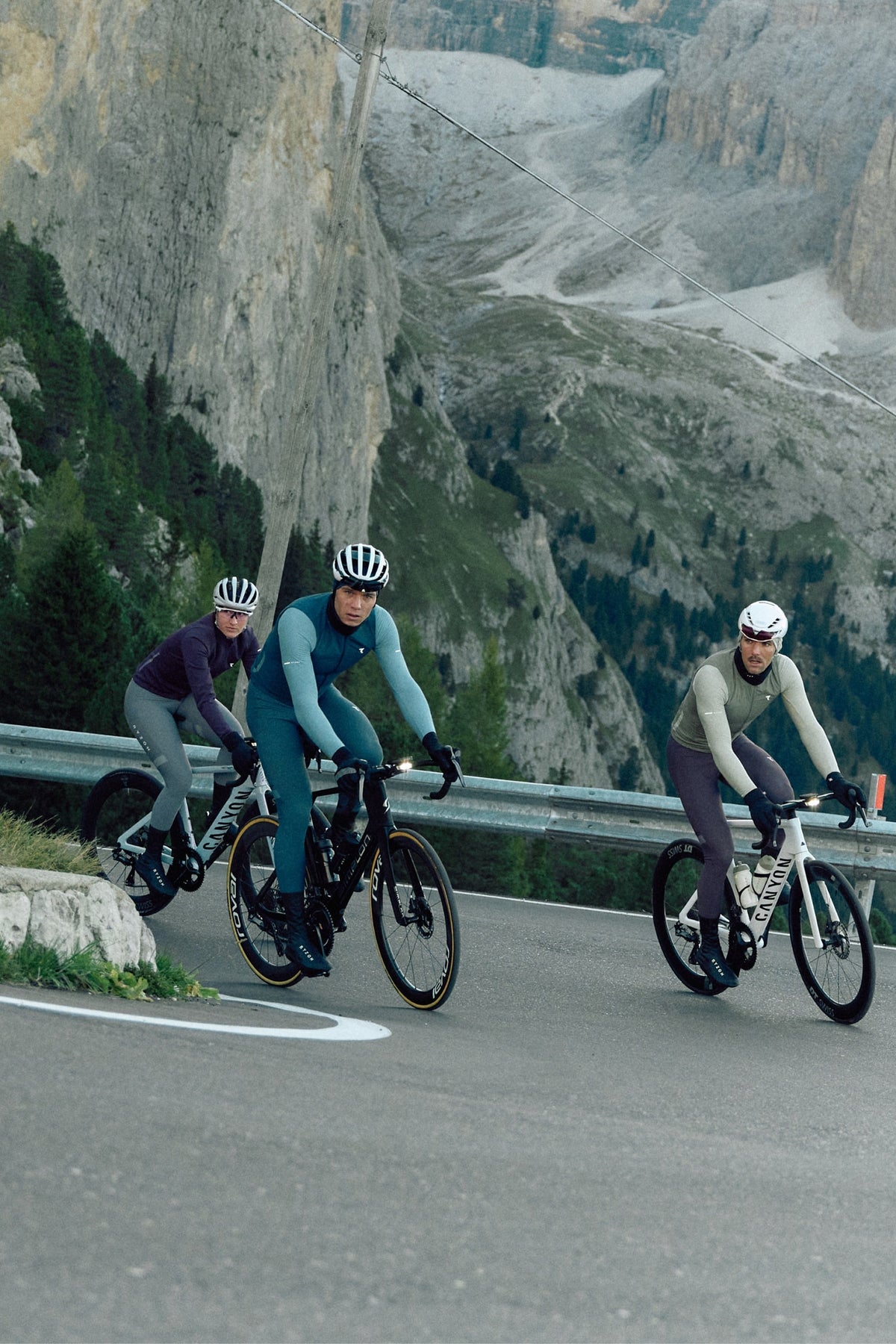
Riding a bike means alternating between sweat-inducing climbs and cool descents. Clothing that dries quickly after a climb helps prevent you from cooling down. On hot days, the Signature AirFlow Jersey in fine mesh is a great choice, while the lightweight, quick-drying Vela Cycling Jersey is perfect for everyday wear. You can find all the styles under Cycling Jerseys. For descents and changeable weather, the Signature Cycling Wind Jacket made from lightweight 64 g/m² LightShell fabric fits into any jersey pocket.
-

Triathlon
In triathlon, drying quickly is especially important because you get on your bike straight out of the water. A triathlon suit is made exactly for this. Triathlete Nick Staggenborg tested the Verge Triathlon Graphene Suit and reports that the suit dries "super fast, as it should" after swimming.


Under the Jersey
A base layer wicks sweat directly away from the skin, so the jersey over it stays dry longer. The Ritual Performance Baselayer made of ultralight mesh is ideal for this, while in winter, the Ritual Merino Baselayer keeps you warm even when damp. You can find all models under Baselayers.
What makes sportswear comfortable?
Being quick-drying alone is not enough; the clothing must also feel good, even after many hours. What matters is a fit that is snug without constricting, soft, stretchy fabrics, flat seams in sensitive areas, and hems that do not dig in. You can read how to avoid chafing with the right clothing in the guide Avoiding Chafing During Sports.
How to keep your clothing quick-drying
Over time, detergent residues and fabric softener can cause the fibers to clump together, making them less effective at transporting moisture. Therefore, wash your sportswear without fabric softener, at a low temperature and with a sports detergent, and let it air dry. You can find all the details in the guide Washing sportswear correctly. And if your clothing still smells quickly despite everything, the guide Sweat and odor during sports will help.
FAQ
-
Synthetic performance fibers such as polyester and polyamide. They absorb very little water and transport moisture to the surface, where it evaporates.
-
Merino dries more slowly than synthetic fibers, but also provides warmth when damp. It is therefore particularly suitable for cool days and long tours.
-
Cotton absorbs sweat, dries slowly, and feels wet against the skin. This leads to chilling, chafing, and odor.
-
A close but non-restrictive fit, soft stretchy fabrics, flat seams and edges that do not dig in.
-
Fabric softener and detergent residue can clog the fibers. Wash your sportswear without fabric softener and with a sports detergent.